Navigating the European Job Market: CV Standards in Germany and Netherlands
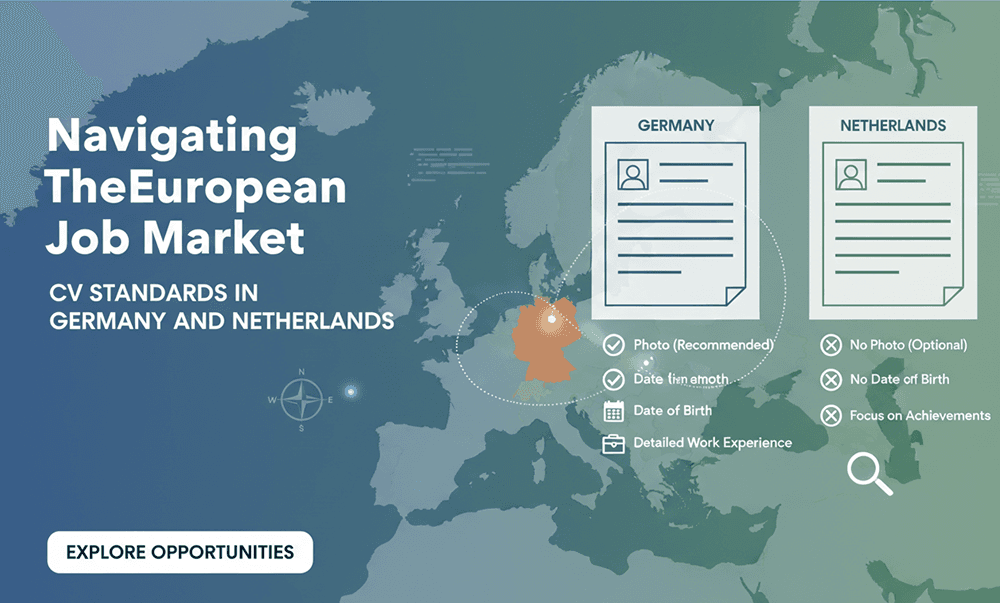
As the global job market becomes increasingly interconnected, professionals are looking beyond their home countries for career opportunities. For those targeting the European job market, particularly in Germany and the Netherlands, understanding the local CV standards is essential. Unlike the US resume, which tends to focus on achievements and skills, European CVs often place more emphasis on education, work history, and personal details.
Contrasting the US Resume with the European CV
A key difference between the two is the inclusion of a professional photo in many European countries, especially in the DACH region (Germany, Austria, and Switzerland). This practice is less common in the US, where the focus is more on skills and experience. Furthermore, European CVs might include more personal information, such as marital status or number of children, which is not typically found in American resumes.
Europass Format vs. Modern Layouts
The Europass format, introduced by the European Commission, aims to standardize CVs across the continent. However, while it provides a clear structure, it may appear somewhat outdated compared to modern, visually appealing layouts. Many job applicants in Germany and the Netherlands are now opting for more contemporary designs that still adhere to traditional content expectations. Utilizing a resume builder can help in creating a balanced, ATS-friendly CV that meets European standards.
Language Proficiency and the Importance of Detail
Listing language proficiency levels, according to the Common European Framework of Reference for Languages (CEFR), from A1 (beginner) to C2 (proficient), is vital for job applications in multilingual Europe. This detail can significantly influence an applicant's eligibility for positions, especially in international companies or roles requiring communication in multiple languages. An AI career assistant can provide guidance on how to effectively highlight language skills and other key qualifications.
For those looking to tailor their CV to the European job market, understanding these nuances is crucial. Whether you're applying in Germany, the Netherlands, or other European countries, a well-structured CV that respects local norms will increase your chances of success. Consider using a LinkedIn import feature to quickly populate your CV with existing professional information.
In conclusion, navigating the European job market requires a deep understanding of local CV standards and preferences. By tailoring your application materials to these norms and highlighting your skills, including language proficiency, you can significantly improve your prospects. Start building your ATS-friendly resume today at gethired.work and take the first step towards a successful European job application.
Related Articles

Explaining Career Gaps: How to Turn a Break into a Strength
US Resume Format: A Guide for International Job Seekers

Software Engineer Resume: Expert Tips and AI Optimization

Cracking the Code: How to Build an ATS-Friendly Resume in 2026

How to Write a Winning Cover Letter with AI Assistance